The Internet of Things is a growing market, and we see a lot of companies and startups developing and launching new devices every month in different countries and markets. We want to show you in this article the real applications of IoT and how you can take advantage of that for your business.
What are IoT applications?
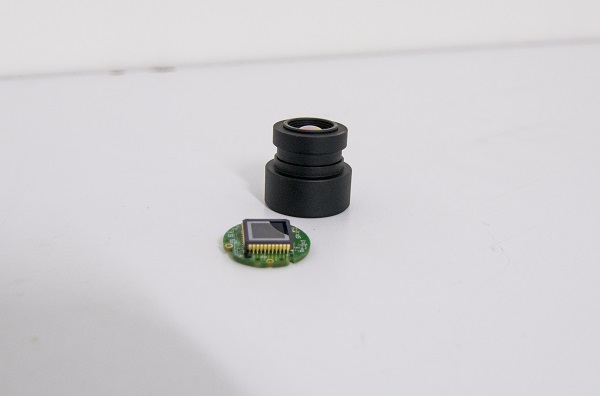
IoT applications are all the possible areas where you could use devices that are connected to the internet and that can provide useful data. These applications enable organizations and individuals to collect and analyze data from a variety of sources, such as machines, vehicles, and buildings, to improve efficiency, reduce costs, and make better decisions.
Another way to see the internet of things applications is the way you can boost the performance of certain activities and that can be appealing to potential clients:
- Automation of tasks.
- Connection of the physical world to the digital world.
- Supply chain management improvement.
- Time reduction of long processes.
- Better management of assets.
- Reducing the risk of accidents.
- Guaranteeing the quality of products or services.
- Quick information analysis.
It is also necessary to understand why IoT applications development is getting high attention from small, medium and large companies. The short answer is, now it is easier to create devices with a reliable electronic product development company than years ago. Hardware, sensors, RFID tags and cloud computing have become more accessible. Also, machine learning and data analytics have increased their performance in complex tasks.
There are even people who create devices with basic engineering knowledge, and they develop them with the help of product prototype development.
On the other hand, rapid prototyping and manufacturing processes in some way have reduced their costs, making it more accessible to create and launch new products in the market.
Why are the internet of things applications important?
Thinking of IoT and their applications make a huge difference on how you can approach a new niche with an interesting IoT device, if you solve a need they have, you will get a lot of attention and potential high sales.
One of the key benefits of IoT applications is their ability to provide real-time data and insights. Thanks to this, companies can make more informed decisions and respond quickly to changing conditions. For instance, let’s think of an IoT application in a manufacturing plant that could monitor the performance of machinery and alert maintenance staff when a problem is detected, reducing downtime and improving productivity.
IoT applications can also help organizations to improve safety and security. For example, an IoT enabled security system could use sensors to detect intrusions and alert corresponding authorities, while an IoT enabled transportation system could monitor the condition of vehicles and alert drivers to potential safety issues like road obstacles, bad weather conditions, or bad traffic situations.
Applications of IoT by market
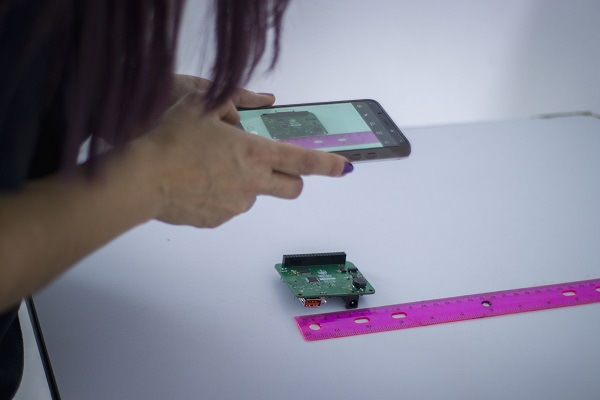
You may wonder, which application would be considered a product of IoT? Well, for us it is the data management, this is the final result of IoT applications.
Systems, sensors, smartphones, tags, anything that can be connected to the internet, has the potential to generate interesting data. And many companies are hiring IoT product development services to design and create devices that can compete in these markets.
If there is space for IoT analytics, there is a potential for selling products that can gather tons of data to improve processes or life.
The common applications for the Internet of Things are the following:
Supply chain management
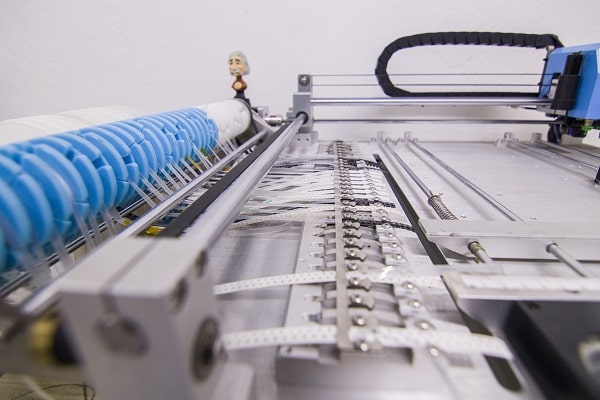
IoT applications in the industry can be used to track the movement of goods and materials through the supply chain, providing real-time visibility into inventory levels and the location of assets. This can help organizations to optimize their operations and improve customer service. You can know more about this in our Industrial IoT applications article.
Asset tracking
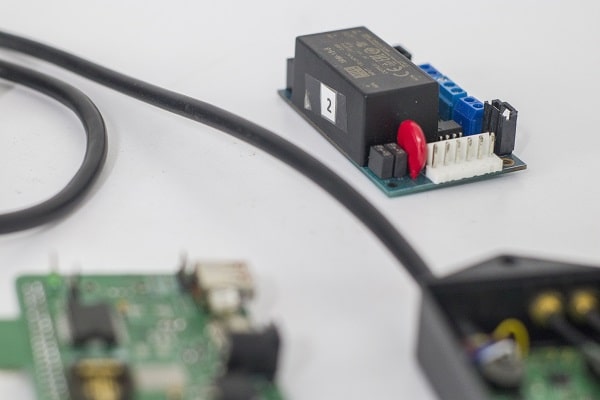
Companies need to keep track of their inventory, equipment, and vehicles. This application of IoT is very useful for asset tracking and management, since organizations can monitor in real time where their assets are, and avoid losing thousands of dollars in equipment.
Also, having access to this information helps them to maintain the operations without delays. We built a tracker for EVs, and the company that uses them has improved the management of their vehicles.
Smart homes
IoT applications can be used to control and monitor a wide range of home appliances and systems, including lighting, heating, and security. This can help homeowners to save energy, reduce their carbon footprint, and improve the overall comfort and convenience of their home. Smart homes is a market where we can find hundreds of IoT devices for automation of different tasks.
Smart buildings
Another interesting application of IoT is presented in smart buildings. There can be thermal cameras installed on every floor to track movement, and to monitor health conditions of the people who live and work there by filtering who can enter an office or apartment with the use of IoT devices.
IoT applications in Smart cities
Smart cities are increasing thanks to new technologies. Why? Because people are looking for efficiency and environmental sustainability. And thanks to the Internet of Things, the way we interact with the cities is changing, allowing citizens to make a good impact on them. People can gather and analyze data from a wide range of sources, including traffic systems, energy grids, and waste management systems.
Smart tourism
The previous application brings us to Smart tourism. A growing market where tourists are the main protagonists. There are many IoT applications examples to mention in this market, one of them is to suggest different museums or historical places according to the location of the tourist. His wearable can receive an alert and the tourist can check his smartphone to analyze which destination looks interesting.
Smart parking
Smart parking opens the possibility of getting available spaces for parking the car, by installing IoT devices around the cities, people can save time on looking for a spot for their cars, and this reduces the pollution and improves the traffic of the city.
Smart mobility
Thanks to Artificial intelligence and different sensors installed around the city, smart mobility can be implemented. People can get a quick analysis on the time they will take with different transportation options and choose the best one. This represents a high improvement on traffic conditions.
IoT applications in the environment
This IoT application in the environment is interesting, since it allows organizations in charge to keep control of air quality conditions, protect endangered species, and monitor the state of natural resources in specific areas.
Smart waste management
Companies are installing sensors in bins, some of them are even building smart bins. This is a great bet on automating the way waste management companies are taking care of the trash that is generated daily in specific parts of the cities.
Smart waste management is also useful to analyze how often bins are getting full, and improve the pick-up times of the garbage trucks.
IoT applications in healthcare
Internet of Things Healthcare applications is a million dollar industry that is attracting hundreds of startups and companies to develop new IoT devices and apps.
Among the IoT applications we can find here, devices can monitor the health and well-being of patients, alerting healthcare providers to potential problems and helping to prevent complications. For example, an IoT enabled wearable device could track a patient’s vital signs and alert healthcare providers if there are any concerning changes.
Wellness market
This is a market that constantly presents new innovations, not only people are talking about fitness, they are also focusing their attention on wellness and IoT. Technology is useful for us, it reduces our efforts in doing tasks and provides new ways to do things, however, with more automation and connectivity, a concern arises regarding mental health, and that’s why it is necessary to maintain wellness in a world where technology is gaining more space every day.
You can find many IoT devices examples in daily life, but many people are questioning if there is a limit for the usage of these products.
We have given you several IoT applications examples in this article. There are even more markets in which the internet of things is gaining ground: IoT in sports, Smart water, smart energy, smart agriculture, IoT in consumer electronics, and IoT in retail.
It is worth mentioning there are many challenges to implementing IoT applications, including data security and privacy concerns, the need for robust networking infrastructure, better IoT protocols, and the complexity of integrating various devices and systems. Organizations looking to implement IoT applications should carefully consider these challenges and develop a clear strategy for addressing them.
As you could see, the applications of IoT have the potential to transform a wide range of industries and sectors, improving efficiency, reducing costs, and enhancing decision-making. As the technology continues to evolve, we can expect to see an even wider range of IoT applications in the future.
And we have two final questions for you:
Which of the previous markets is bringing your attention to design and build a new device?
What IoT device would you like to develop?
Get in contact with us by clicking on the button below and schedule a free consultation regarding your IoT project, our engineering experts will gladly help you out.